
PALS Certification In Sacramento CA
Children can get worse very fast during an emergency. So, healthcare workers need clear steps they can follow under pressure. PALS training classes teach how to check a child, choose the right action, and work as a team. At EASY ACLS BLS PALS, we keep our teaching simple, clear, and useful. We offer classes for PALS certification in Sacramento CA, for learners to practice Pediatric Patient Scenarios that match real care problems. These include an infant with severe respiratory distress, a child with asthma-related respiratory failure, a toddler with septic shock, and a child with bradycardia caused by hypoxia.
These cases help students understand what to do first, what to watch, and when to act. Also, our Sacramento PALS certification course helps learners calmly connect signs, symptoms, and care steps.
Here are the main class areas that help learners build stronger pediatric emergency skills:
- Expertise: Our instructors explain each step in plain words, so learners understand pediatric care without feeling lost.
- Case Practice: Students work through child and infant emergencies so that they can link warning signs with the right response.
- Team Roles: We show how each person helps during care, so the group works in better order.
- Skill Review: Learners practice airway help, chest compressions, and rhythm checks with direct guidance.
Because of this, our PALS certification helps providers feel more ready for child emergencies at work.

Training Designed for Pediatric Care Providers
Many learners who take PALS training classes in Sacramento CA, already care for children, but they may not face pediatric emergencies every day. So, our class helps them stay ready when a child needs fast help. Pediatric nurses use PALS skills when a child has breathing trouble, poor blood flow, or a sudden change in heart rhythm. Emergency department nurses also use these steps during triage, room care, and code response. Paramedics and EMTs need PALS training because children may need help before they reach the hospital. Also, respiratory therapists use this class to review oxygen support, assisted breathing, and breathing failure in infants and children.
At EASY ACLS BLS PALS, we explain each part so that learners can follow the process with less stress. We focus on what the learner needs to know, how the steps work, and when to use them. Our classes for PALS certification in Sacramento CA, is helpful for hospital teams, EMS workers, and other care providers who work near children.
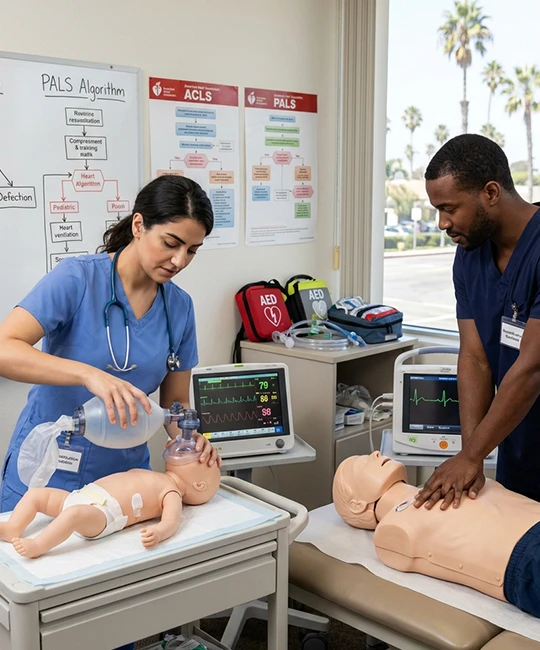

Instructor-Led Pediatric Skills Practice
Classroom-based PALS training works well for learners seeking group interaction, instructor feedback, and hands-on support when reviewing pediatric emergency care. In our PALS training classes in Sacramento CA, students do more than sit through lessons. They participate in guided practice, ask questions, and work through realistic clinical scenarios to help them connect course material to patient care.
Our course includes real pediatric patient videos and lifelike simulations, so learners can see how breathing problems, poor circulation, rhythm changes, and sudden decline may present in real-world settings.
Here are the main classroom features that help learners build stronger pediatric emergency response skills:
- Instructor Feedback: Classroom learning gives students direct guidance from instructors, so they can ask questions, correct mistakes, and better understand pediatric emergency steps during practice.
- Group Interaction: Learners practice with classmates during scenarios, helping them improve communication, role clarity, and teamwork when pediatric care requires quick and organized action.
- Patient Videos: Actual pediatric patient videos help students recognize breathing trouble, poor circulation, rhythm changes, and other warning signs that may appear during emergencies.
- Lifelike Simulations: Realistic simulations encourage active participation, helping learners apply assessment steps, choose interventions, and respond with more confidence during pediatric emergency cases.
- Systematic Care: The course teaches a clear approach to assessing and treating pediatric patients, helping providers check appearance, breathing, circulation, airway, and oxygen needs.
Also, our PALS certification course follows a systematic approach to assessing and treating pediatric patients, helping learners proceed in the right order during high-pressure cases.
Why Choose Us
Child-Sized Care
We focus on pediatric-specific actions to help providers avoid one-size-fits-all responses when infants and children need age-appropriate emergency care.
Rhythm Confidence
We make pediatric rhythm review easier to understand, helping students respond faster when bradycardia, tachycardia, or arrest rhythms appear during care.
Airway Control
We help learners improve pediatric airway decisions, so ventilation support feels clearer when breathing problems create urgent pressure during a case.
FAQs
Pediatric rhythms can feel stressful because small changes may signal serious decline. EASY ACLS BLS PALS helps students read rhythm patterns, connect them to patient signs, and respond with correct pediatric emergency steps.
Yes, infrequent pediatric contact can make emergency response feel unfamiliar. The course reviews child-focused assessment, airway support, rhythm response, and team roles to help providers refresh their skills before encountering a real pediatric case.
Children often develop cardiac arrest from breathing failure or shock, not sudden adult-style heart events. Our training highlights airway, oxygenation, and ventilation because early breathing support can change the direction of pediatric emergency care.